Insights into Addiction: For non-addiction practitioners
Thank you for your interest in this training.
This topic is now only available for organisations as private, in-house workshops either face-face or online, for teams of 15 - 40 participants.
Please contact us for more information or visit our website for more great PD options
Addiction training that is ethical, competent and culturally responsive so that whānau affected by addiction can flourish.
In this interactive workshop with Chris Malcolm, Lecturer of Health and Wellbeing (Applied Practice) and Addiction Studies, Chris will clarify what constitutes addiction and presents a rationale for why clinicians, support workers and whanau all need to know about it.
Addiction training for non-addiction practitioners is designed as an introductory workshop for those wanting to gain an understanding about addiction and will provide some generic tools that can assist anyone who finds it challenging to support and work with these clients.
Outlining several models for understanding substance and behavioural addictions, the workshop will also examine how to identify a range of behavioural and substance addictions and describe several treatment considerations for the most common addictions. The bulk of the training day deals with the characteristics and treatment considerations for the five most prevalent behavioural addictions: drug/alcohol, internet gaming addiction, sex/pornography addiction, gambling addiction, and food addiction.
Chris will also explore the implications that culture and lifestyle have on the person and their whanau, and the treatment pathways available. He will also discuss insights and the challenges of working with families impacted by addictions.
Covered will be the drivers of addiction: Emotional factors (eg stress, trauma, emotional pain), neurological changes, genetic predisposition, environmental influences, psychological factors and behavioural factors, and how to navigate the recovery process.
It will address:
· Why do people use substances or develop behavioural addictions?
· What types of addictions are there and how do use of some substances lead to addiction?
· What do we mean by “addiction” and “dependence”?
· Physiological, psychological and social processes involved in addiction.
· Understanding levels of use and identifying problematic, harmful of hazardous addiction-related behaviours
· Environmental and systemic influences on addictions, including the social paradigm of addictions
· Impact of trauma and attachment on substance use and risky behaviours
· Addressing behavioural change and motivation
· Exploring a range of supports and interventions, including types of self-help, family/whānau support, clinical or professional support.
· Essential principles and skills for working with addictive behaviours
Learning Objectives
Understanding of a broad range of substance and behavioural addictions
Awareness of the physical, mental, emotional, spiritual and social impacts of addiction
Appreciation of the social and cultural context of addictions as well as potential steps towards addressing these
Explore options for responding constructively to people experiencing addiction-related issues, and treatment options available in most communities
Spaces are limited. Contact us today to make a pencil booking if you are seeking funding approval.
Please Note: this workshop may touch on emotional issues such as trauma, and some of the material covered in our workshops may be sensitive or triggering to certain participants. We encourage everyone to practice self-care and either reach out to us, or directly discuss any concerns with our presenter.
Who Should Attend
This addiction training is for a broad range of professional who do not possess a deep understanding of addictions, who have no or little psychological training, who may be struggling with how to work with these clients.
This includes (but is not limited to) front-line staff and those working in social services, health and law enforcement:
Case Workers, Unit Managers, Mental Health Nurses, Social Workers
Therapists, and Licensed Practicing Counsellors
Community mental health staff
Emergency Room staff, Crisis Telephone Helpline staff
School counsellors
Police and Probation Officers
Youth justice counsellors
General Practitioners
It will particularly suit those in NFP’s, community-based outreach services and community organisations.
NOTE - If your organisation is interested in having Chris present face-face to between 15 - 40 members of your team, please contact Faye Johnson for more information.
If you do not have sufficient numbers within your team, we recommend you consider opening the training up either to other Branch’s of your organisation or other region-based community agencies you work with. We have worked with many organisations this has worked well for - contact us for further information.
The following peak bodies and organisations recognise that the training we offer is of a high quality, evidence based and relevant for their members CPD - 20 points per day.
About the Presenter
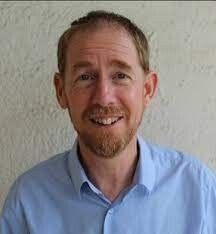
Chris Malcolm - Lecturer, Applied Practice, Eastern Institute of Technology, Hawkes Bay
Chris teaches Health and Wellbeing (Applied Practice) and Addiction Studies at EIT (the Eastern Institute of Technology, Hawkes Bay).
Originally a Wellingtonian with family roots in Hawke’s Bay, he has spent many years working in mental health, counselling and management and joined the staff of EIT, Hawkes Bay in 2009.
He has supervised Post Grad (Health Science) students and recently developed and co-taught several Post Graduate micro-credential courses in Health Science. Chris’ interests within this field center on Trauma-informed practice, Family-inclusive practice, Peer-led Recovery, Cognitive Behavioural approaches and strengths-based approaches to building resilience. He is a member of DAPAANZ, ANZACBT and ANZTCA.
With a passion for supporting others, in 1999 Chris previously completed studies in spirituality and applied theology at Oxford University (UK) and helps out from time to time with the Chaplaincy team on the Taradale campus.
Outside of work he has a love for travel and over the years has enjoyed cycling around Europe. Now with one of his children now at University and the second about to head away from the Bay, Chris has more time for his other passions including a-cappella singing and coordinating the local DAPAANZ (addiction practitioners’) Journal Club.
What past participants had to say about the workshop
"There were so many aspects of the workshop that were really good. I now have a much deeper understanding. Pae Tata Pae Tawhiti"
"I left this workshop feeling inspired and hopeful that I can help make a difference for people struggling with addictions"
"This course online was really good, and the group work was brilliant."
"I usually struggle with online workshops, but the presentation and content were really interesting, engaging, and comprehensive. I've recommended Insights into Addictions to all of my colleagues."
"Chris Malcolm was a great facilitator - easy to listen to and kept workshop interesting, varied, and interactive. Thank you."
Want to keep up to date with relevant training?
Sign up for our weekly e-newsletter.
Upskill and access our FREE resources and workshops.
Be inspired by our subject matter experts!

CONTACT FAYE
For further details, please contact:
e: faye@grow.co.nz
p: 027 607 3000
Contact Grow
83a Waghorne Street
Ahuriri
Napier 4110
e: info@grow.co.nz
p: 021 751 932

Hours
Monday - Friday: 9.00am - 5.00pm
Your trusted provider of Professional Development…
Sharing knowledge & skills,
building hope &
championing those who are
making a positive difference
in the lives of others.